1. Buildings and Structures:
- Buildings and structures usually have a foundation or a base that supports their weight and provides stability.
2. Mountains:
- Mountains have a base, which refers to the lower part or the foot of the mountain.
3. Furniture:
- Furniture pieces, such as tables and chairs, typically have a base that supports the top.
4. Trees and Plants:
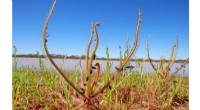
- Trees and plants have a root system that serves as their base, anchoring them in the ground and providing support.
5. Mathematics:
- In mathematics, some geometric figures have bases, such as triangles, pyramids, and cones. The base of a triangle is the line segment on which it rests, and the base of a pyramid or cone is the polygonal surface upon which it sits.
6. Chemistry:
- In chemistry, a base refers to a substance that can accept hydrogen ions (H+) in a reaction. Bases are characterized by their ability to neutralize acids.
7. Electronics:
- In electronics, some devices have a base, such as transistors. The base of a transistor is a semiconductor layer that controls the flow of current between the emitter and collector.
8. Military and Law Enforcement:
- In military and law enforcement contexts, a base refers to a military or police installation or facility.
These are just a few examples of what can have a base. The term "base" can have different meanings and applications in various fields and contexts.