1. Geological Cleavage:
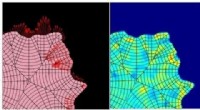
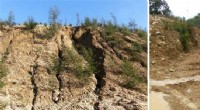
In geology, cleavage describes the splitting of rocks into relatively thin, flat pieces or slabs. It occurs due to pressure and stress within the Earth's crust, causing minerals and rock components to align and weaken along particular directions. This results in the formation of distinct fracture patterns, such as slaty cleavage, schistosity, or foliation, which are important for understanding rock formation and deformation processes.
2. Biological Cleavage:
In biology, cleavage refers to the process of cell division in early embryonic development. It involves the division of a single fertilized egg cell, known as a zygote, into multiple smaller and identical cells called blastomeres. These blastomeres undergo successive rounds of cleavage to form a hollow ball of cells called the blastocyst, which eventually leads to the development of different tissues and organs in an organism.
3. Crystallographic Cleavage:
In crystallography, cleavage describes the tendency of certain minerals and crystals to break along specific planes or directions when subjected to mechanical stress or pressure. This characteristic is influenced by the arrangement of atoms or molecules within the crystal lattice and the strength of the interatomic bonds. Cleavage planes are often parallel to faces of the crystal's natural shape or symmetry, and their presence helps in mineral identification and crystallographic studies.
4. Fracture Cleavage:
In materials science and engineering, fracture cleavage refers to the process of brittle fracture, where a material breaks into two or more pieces without significant plastic deformation. It occurs when the applied stress exceeds the material's cohesive strength, causing it to split along preexisting cracks or defects, or by the formation of new cracks through the material.
5. Cleavage Planes in Minerals:
In mineralogy, cleavage planes are the preferred orientations along which a mineral breaks, as determined by its crystal structure and atomic bonding. Minerals that exhibit perfect cleavage, such as mica or calcite, can be split into smooth and flat surfaces. The presence and orientation of cleavage planes are important diagnostic characteristics for mineral identification and classification.
6. Wood Cleavage:
In wood science, cleavage refers to the splitting of wood along its grain or fibers. The ease of cleavage depends on the wood species, grain orientation, and the presence of knots or defects. Cleavage is often employed in woodworking and carpentry to prepare planks, boards, and veneers from logs or larger pieces of wood.
In summary, cleavage in science encompasses various phenomena related to the splitting, separation, or fracturing of materials or structures along specific planes or directions. It is observed in geological formations, embryonic development, crystallography, materials science, mineralogy, and woodworking, each with its unique implications and significance. Understanding cleavage is essential in these fields for studying rock formations, cell division, mineral properties, material behavior, and wood processing techniques.