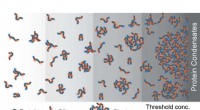
1. Hydrophobic Interactions: Hydrophobic molecules tend to cluster together to minimize their contact with water. In protein-rich droplets, hydrophobic regions of proteins interact with each other, forming a condensed phase.
2. Van der Waals Forces: Van der Waals forces are weak attractive forces that occur between all molecules. In protein-rich droplets, these forces contribute to the cohesion of the droplets and prevent them from dispersing.
3. Electrostatic Interactions: Electrostatic interactions between oppositely charged molecules can also contribute to LLPS. For example, positively charged proteins may attract negatively charged molecules, leading to the formation of protein-rich droplets.
4. Crowding: The presence of a high concentration of macromolecules in a solution can also promote LLPS. Crowding can lead to excluded volume effects, where molecules compete for space, resulting in the formation of dense, liquid-like droplets.
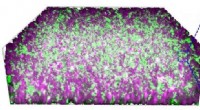
The formation of protein-rich droplets is a dynamic process that can be influenced by various factors such as temperature, pH, salt concentration, and the specific protein composition of the solution. These droplets can serve as functional compartments within cells, allowing for the organization and regulation of cellular processes.