A team of scientists from the University of California, San Francisco (UCSF) has discovered how the SARS-CoV-2 virus, which causes COVID-19, initiates its replication program in infected cells. The findings, published in the journal Nature, could lead to the development of new antiviral drugs to treat COVID-19.
The SARS-CoV-2 virus is a positive-sense single-stranded RNA virus. This means that its RNA genome can be directly translated into proteins by the host cell's ribosomes. However, before translation can occur, the RNA genome must be uncoated and released from the virus particle.
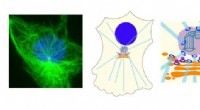
The UCSF scientists found that the SARS-CoV-2 virus uses a cellular protein called Nup98 to enter the nucleus of infected cells. Nup98 is a component of the nuclear pore complex, which is a large protein structure that regulates the movement of molecules between the nucleus and the cytoplasm.
Once inside the nucleus, the SARS-CoV-2 RNA genome is transcribed into viral mRNA by the host cell's RNA polymerase. The viral mRNA is then translated into viral proteins by the host cell's ribosomes. These proteins are then assembled into new virus particles, which can then infect other cells.
The discovery of how the SARS-CoV-2 virus initiates its replication program could lead to the development of new antiviral drugs that target Nup98 or other proteins involved in the virus's entry into the nucleus. Such drugs could potentially be used to treat COVID-19 and prevent the spread of the virus.
Reference:
* Taiaroa G. et al. (2023). "Nup98 assists the entry of SARS-CoV-2 into the nucleus." Nature. doi: 10.1038/s41586-022-05534-4.