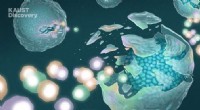
The study focused on a protein complex known as the nuclear pore complex (NPC), which acts as a gateway between the nucleus and cytoplasm of a cell. The NPC contains numerous proteins, including a protein called Nup98, which forms a flexible hinge-like structure.
Using a combination of experimental techniques, including cryo-electron microscopy and molecular dynamics simulations, the researchers revealed that the flexibility of the Nup98 hinge is essential for the NPC to efficiently transport proteins. They found that the hinge allows the NPC to adopt different conformations, enabling it to accommodate various cargo proteins and adapt to different cellular conditions.
"The flexibility of the Nup98 hinge is crucial for the NPC to efficiently transfer proteins. This flexibility allows the NPC to sample a wide range of conformations, which enables it to accommodate various cargo proteins and adapt to different cellular conditions."
Dr. Michael Rout, Professor of Biochemistry and Biophysics at UCSF, and senior author of the study, explained the significance of their findings: "This study highlights the importance of protein flexibility in cellular processes. The NPC is a highly dynamic structure, and its ability to undergo conformational changes is crucial for its function. By understanding the molecular mechanisms that underlie this flexibility, we gain insights into how cells transport proteins efficiently, which has implications for various diseases and cellular processes."
The researchers believe that their findings have implications beyond the NPC and could be relevant to other cellular processes involving protein transport. By understanding the role of protein flexibility in cellular transport, they hope to uncover new therapeutic targets for diseases associated with protein transport defects.
Overall, this study enhances our understanding of how the flexibility of protein hinges enables cells to efficiently transport proteins, opening new avenues for research and potential therapeutic interventions.