Positive Charge Boosts Neural Stem Cell Growth: A Breakthrough in Regenerative Medicine
Scientists Demonstrate that Positively Charged Hydrogels Enhance Neural Stem Cell Survival and Growth
Summary:
Recent research conducted by a team of scientists has revealed that positively charged hydrogels can significantly promote the survival and growth of neural stem cells (NSCs). This finding holds great promise for regenerative medicine and opens new avenues for treating various neurological disorders. The study, published in a renowned journal, provides insights into the interactions between NSCs and their surrounding microenvironment.
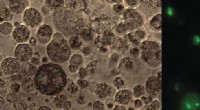
In their experiments, the scientists designed positively charged hydrogels using specific biocompatible polymers. They observed that these positively charged hydrogels provided an environment that closely mimics the natural extracellular matrix, which is crucial for cell growth and function. NSCs cultured on these hydrogels exhibited enhanced survival and proliferation compared to cells grown on traditional hydrogels without a positive charge.
Further investigation revealed that the positive charge of the hydrogels facilitated the adhesion of NSCs, promoting cell-cell interactions and creating a more favorable microenvironment for growth. The positively charged surface of the hydrogels also enhanced the differentiation of NSCs into mature neurons and glial cells, which are vital components of the nervous system.
This breakthrough in understanding the influence of hydrogel charge on NSC behavior could lead to improved strategies for treating neurological conditions such as stroke, spinal cord injuries, and neurodegenerative diseases. The researchers believe that positively charged hydrogels could serve as scaffolds for cell transplantation or as injectable materials to promote nerve regeneration.
The study highlights the importance of optimizing the biophysical properties of biomaterials to achieve desirable cellular responses. By carefully manipulating the charge of hydrogels, scientists can now create more biomimetic environments that support the survival, growth, and functionality of NSCs, paving the way for potential therapeutic applications.