Plants have a remarkable ability to heal wounds, and this process is guided by mechanical forces. When a plant is injured, the cells around the wound site undergo a series of changes that lead to the formation of new tissue. These changes are driven by the forces that are generated by the plant's cells as they divide and grow.
One of the most important mechanical forces involved in wound healing is tension. When a plant is injured, the cells around the wound site are stretched, and this stretching creates tension in the cell walls. This tension stimulates the cells to produce new cell wall material, which helps to close the wound.
Another important mechanical force involved in wound healing is compression. When a plant is injured, the cells around the wound site are often compressed, and this compression creates pressure on the cell walls. This pressure stimulates the cells to produce new cell wall material, which helps to strengthen the wound site.
The direction of cell division is also guided by mechanical forces. When a plant is injured, the cells around the wound site divide in a way that helps to close the wound. This is because the mechanical forces that are generated by the plant's cells are strongest in the direction of the wound.
The ability of plants to heal wounds is essential for their survival. By being able to repair damage, plants can continue to grow and reproduce, even after they have been injured.
Here is a more detailed look at the process of wound healing in plants:
1. Wounding: When a plant is injured, the cells at the wound site are damaged and killed. This damage triggers a series of responses in the surrounding cells.
2. Defense: The first response is the production of defense-related proteins, such as antimicrobial peptides and enzymes. These proteins help to protect the plant from infection and disease.
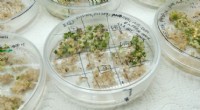
3. Callus formation: The next response is the formation of a callus, which is a mass of undifferentiated cells that forms over the wound site. The callus helps to seal the wound and protect the plant from further damage.
4. Cell division: The cells in the callus then begin to divide and grow, forming new tissue. The direction of cell division is guided by mechanical forces, such as tension and compression.
5. Differentiation: The new cells that are formed during wound healing eventually differentiate into different types of cells, such as xylem, phloem, and epidermal cells. This process is also guided by mechanical forces.
6. Maturation: The new tissue that is formed during wound healing eventually matures and becomes fully functional. The plant is then able to continue to grow and reproduce.
The process of wound healing in plants is a complex one, but it is essential for their survival. By being able to repair damage, plants can continue to thrive, even in harsh environments.