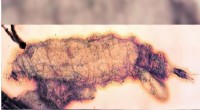
The researchers, led by Professor Akiko Hirayama from the OIST Marine Genomics Unit and Professor Diarmaid Ó Foighil from the University of Gothenburg's Department of Marine Sciences, studied the water flea Daphnia magna, a small freshwater crustacean that reproduces both sexually and asexually.
Daphnia magna is a species that is known for its cyclical parthenogenesis, which means that it alternates between asexual and sexual reproduction. During asexual reproduction, females produce genetically identical offspring without the need for males. However, under certain environmental conditions, such as crowding or lack of food, Daphnia magna switches to sexual reproduction and males are produced.
The researchers found that a key factor in determining the sex of Daphnia magna is the concentration of a hormone called juvenile hormone (JH). JH is produced by a gland in the head of the water flea and its levels fluctuate during the life cycle of the organism.
In asexual females, JH levels are high, which inhibits the development of male characteristics. However, when JH levels drop, such as in response to environmental cues, it triggers the development of males.
The researchers also found that JH levels are regulated by a gene called doublesex (dsx). Dsx is a master regulator of sex determination in many animals, and in Daphnia magna it is responsible for controlling the expression of other genes that are involved in male and female development.
By understanding how JH and dsx control sex determination in Daphnia magna, the researchers hope to gain insights into the evolution of sex and the regulation of sexual reproduction in other animals.
The study was published in the journal Nature Communications.