The human brain is a remarkable organ, capable of processing and integrating vast amounts of information from our environment to create a coherent perception of the world around us. This ability, known as perceptual organization, allows us to perceive objects as whole entities rather than just a collection of individual parts. While the general concept of perceptual organization has been studied for decades, the specific neural mechanisms underlying this process remain elusive. In this article, we delve into recent studies that shed light on how the brain achieves this remarkable feat of integrating parts into a cohesive whole.
1. Gestalt Psychology: The Foundation of Perceptual Organization
The field of perceptual organization has its roots in Gestalt psychology, a school of thought that emerged in the early 20th century. Gestalt psychologists argued that the mind actively organizes sensory information into meaningful wholes, based on inherent principles such as proximity, similarity, and continuity. These principles help us group individual elements together, creating a unified perception.
2. Neural Correlates of Perceptual Organization
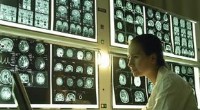
Advancements in neuroimaging techniques, such as functional magnetic resonance imaging (fMRI), have enabled researchers to investigate the neural correlates of perceptual organization. Studies have identified specific brain regions and networks involved in this process, including:
- Ventral Temporal Cortex: This brain region is associated with object recognition and plays a crucial role in perceptual organization. It is believed to be involved in integrating individual features into a coherent object representation.
- Parietal Cortex: The parietal cortex is involved in spatial processing and attention. It contributes to the grouping of elements based on their spatial relationships and helps establish boundaries between objects.
- Frontal Cortex: The frontal cortex, particularly the prefrontal cortex, is involved in higher-level cognitive functions, including decision-making and working memory. It is thought to play a role in selecting relevant features and suppressing irrelevant information during perceptual organization.
3. Neural Circuits and Synchronization
In addition to identifying specific brain regions involved in perceptual organization, researchers have explored the underlying neural mechanisms that facilitate communication and integration between these regions. One important finding is the synchronization of neural activity across different brain areas. Studies have shown that neurons involved in perceptual organization fire in synchrony, creating a coherent neural representation of the perceived object.
4. Role of Attention and Feedback Mechanisms
Attention plays a crucial role in perceptual organization by selectively enhancing the processing of relevant information and suppressing irrelevant distractions. Feedback mechanisms within the brain allow for constant adjustment and refinement of perceptual representations, ensuring that they align with the incoming sensory information.
5. Implications for Perception and Cognitive Disorders
Understanding the neural mechanisms of perceptual organization has implications for our understanding of various perceptual phenomena, such as illusions and perceptual errors. Moreover, it provides insights into cognitive disorders that affect perceptual abilities, such as agnosia (impaired object recognition) and visual neglect (inattention to one side of the visual field).
Conclusion:
The study of how the brain makes a whole out of parts is an intricate and ongoing field of research. While we have gained significant insights into the neural mechanisms underlying perceptual organization, many questions remain unanswered. Further research is needed to fully elucidate the complex interplay of brain regions, neural circuits, and cognitive processes that enable us to perceive our world as a cohesive and meaningful whole.