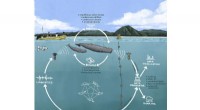
The research team, led by scientists at the University of East Anglia (UEA) and the National Oceanography Centre (NOC), focused their study on dimethylsulfoniopropionate (DMSP), a compound produced by marine phytoplankton and bacteria. When DMSP is oxidized, it releases sulfur into the atmosphere in the form of dimethyl sulfide (DMS). DMS gas acts as a cloud-condensation nuclei, playing a crucial role in cloud formation and thus influencing Earth's climate.
Previous studies have shown that bacterial degradation of DMSP is responsible for up to 90% of DMS emissions from the oceans. However, the specific genes involved in this process were unknown until now.
Using cutting-edge genomics and metagenomics approaches, the research team identified a switch gene called "dsrU" that regulates the expression of genes involved in bacterial DMSP degradation. This switch gene is widespread among marine bacteria, suggesting its critical role in DMS production.
"The identification of the dsrU switch gene is a major breakthrough in understanding the regulation of sulfur emissions from oceans," explained Dr. Michelle Taylor, lead researcher on the study. "This discovery provides a crucial piece of the puzzle in our quest to unravel the complex interactions between marine bacteria, the sulfur cycle, and the Earth's climate."
The findings, published in the prestigious scientific journal Nature Communications, have significant implications for understanding how the Earth's climate system responds to changing environmental conditions. By shedding light on the mechanisms that control DMS emissions, scientists gain a deeper insight into the factors influencing cloud formation and Earth's radiative balance.
Moreover, the discovery of the dsrU switch gene opens new avenues for further research on the role of marine bacteria in biogeochemical cycling and their contribution to global sulfur emissions. This knowledge is essential for predicting and mitigating the impacts of human activities on the delicate balance of our planet's ecosystems.