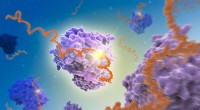
Kinesin-1 is responsible for transporting various cargoes, such as organelles and vesicles, along microtubules, long cylindrical protein structures that form part of the cytoskeleton. Defects in kinesin-1 function have been linked to several neurodegenerative diseases, including ALS and Alzheimer's, highlighting the importance of understanding its precise mechanism.
Using a combination of cryo-electron microscopy, biochemical assays, and computational modeling, an international team of researchers led by Dr. Rebecca Wade at the University of Oxford and Dr. Michael Cianfrocco at the Max Planck Institute of Biochemistry deciphered the structural dynamics of kinesin-1 as it undergoes a series of conformational changes during the transport process.
The study revealed that kinesin-1 consists of two identical motor domains, each containing a "head" and a "neck." These motor domains work together in a hand-over-hand fashion, with one head binding to a microtubule while the other releases, allowing the protein to move forward.
The researchers identified a key structural element called the "neck linker," which acts as a molecular switch. When ATP, the cellular energy currency, binds to the motor domain, it triggers conformational changes in the neck linker, causing the head to detach from the microtubule. This allows the other head to bind and repeat the process, resulting in continuous movement.
"We have captured the precise structural changes that occur during the kinesin-1 stepping cycle, providing a detailed understanding of how this molecular motor converts chemical energy into mechanical work," explains Dr. Wade. "This knowledge paves the way for future studies exploring the regulation of kinesin-1 and its potential therapeutic implications in diseases associated with its malfunction."
The findings from this research not only deepen our understanding of fundamental cellular processes but also offer new avenues for developing treatments targeting motor protein dysfunctions, which could lead to novel therapeutic strategies for a range of neurodegenerative disorders.