1. Data Collection: Researchers use specialized recording devices or bat detectors to capture the ultrasonic echolocation calls emitted by bats. These recordings contain essential information about the echoes bats receive from various objects, including plants.
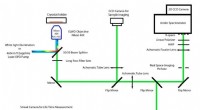
2. Signal Processing: The collected echolocation recordings are processed using computer software. Signal processing techniques are applied to extract relevant features from the echoes, such as frequency components, time delays, and amplitude modulations.
3. Feature Extraction: Computers are programmed to identify and extract specific features from the echo signals that are characteristic of different plant structures. For example, different plant species may produce distinct patterns in their leaf echoes based on leaf shape, size, and texture.
4. Machine Learning and Classification: Machine learning algorithms are employed to train computers to recognize patterns in the extracted features. By using supervised or unsupervised learning techniques, computers can learn to classify plant species based on the echolocation data. Supervised learning involves providing the computer with labeled data (e.g., echolocation recordings paired with plant species), while unsupervised learning allows the computer to discover patterns in unlabeled data.
5. Echolocation Simulations: Computer models and simulations can be used to recreate virtual environments that mimic real-world scenarios. Researchers can simulate bat echolocation by generating artificial echoes based on plant models and analyze how bats respond to these simulated echoes.
6. Virtual Reality Integration: In some studies, virtual reality (VR) technology is integrated with computer simulations. VR allows researchers to create immersive environments where bats can navigate virtually and interact with simulated plants. By analyzing bat behavior and echolocation patterns in these VR environments, researchers can further understand how bats classify plants.
7. Data Visualization and Analysis: Computers enable the visualization and analysis of large volumes of echolocation data. Researchers can use visual representations such as spectrograms and 3D point clouds to explore complex patterns and relationships in the echo signals. Statistical analyses are also performed to quantify and compare the differences between plant classifications made by bats and computers.
By utilizing computers, researchers can analyze vast amounts of echolocation data, extract meaningful features, and apply machine learning techniques to accurately classify plants based on the echoes they produce. These findings provide insights into the fascinating sensory capabilities and ecological interactions of bats.