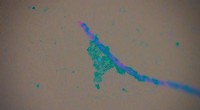
The antibody gene, called IGHV1-69, is responsible for producing antibodies that target a wide range of pathogens, such as bacteria and viruses. Researchers at the University of California, San Francisco, used a cutting-edge imaging technique called cryo-electron microscopy to capture a detailed picture of the gene in action.
The 3D image revealed that the IGHV1-69 gene is shaped like a Y. The two arms of the Y are responsible for binding to antigens, which are molecules that trigger the immune response. The base of the Y is where the gene's promoter region is located. The promoter region controls when and where the gene is expressed.
The researchers also discovered that the IGHV1-69 gene is highly flexible. This flexibility allows the gene to bind to a wide variety of antigens, which is essential for the body to be able to fight off infection.
The discovery of the 3D structure of the IGHV1-69 gene could lead to new treatments for diseases such as cancer and HIV. By targeting the promoter region of the gene, it may be possible to develop drugs that can either turn the gene on or off. This could be used to boost the immune response in cancer patients or to suppress the immune response in HIV patients.
"The 3D structure of the IGHV1-69 gene provides us with a new understanding of how the immune system works," said study lead author Dr. John T. Chang. "This discovery could lead to new treatments for a wide range of diseases."
The study was published in the journal Nature.