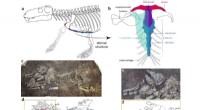
Natural selection: Saber-toothed tigers primarily fed on large prey, such as mammoths, giant ground sloths, and antelopes. Their specialized teeth allowed them to deliver deep, debilitating wounds to their prey's vital organs. This hunting strategy provided a significant adaptive advantage, enabling saber-toothed tigers to efficiently kill and consume their prey.
Competition: The prehistoric ecosystems where saber-toothed tigers lived were often highly competitive, with numerous predator species competing for limited resources. The evolution of long upper canine teeth may have been an adaptation to gain a competitive edge in hunting, allowing them to subdue and secure prey more effectively than other predators.
Adaptive radiation: Saber-toothed tigers evolved from primitive feline ancestors over millions of years. Adaptive radiation, the process by which a group of organisms evolves diverse adaptations to exploit different ecological niches, drove their evolution. The development of elongated canine teeth was a prominent example of this process, enabling them to capitalize on the opportunity to fill the role of a specialized predator.
Jaw modifications: Accompanying the growth of the upper canine teeth were corresponding modifications to the jaw structure of saber-toothed tigers. Their lower jaws were shortened and their jaw joints were reoriented to allow the upper canines to extend below the lower jaw. This unique jaw structure facilitated efficient puncture and slashing motions during hunting.
While saber-toothed tigers' long upper canine teeth were a remarkable evolutionary adaptation, they also may have contributed to their eventual decline and extinction. Some researchers suggest that as climate conditions changed and prey populations dwindled, their highly specialized dental features may have become less advantageous. Saber-toothed tigers became extinct during the late Pleistocene epoch, along with many other megafauna, potentially due to a combination of factors, including changing ecosystems and competition from other predator species.
In summary, the evolution of saber-toothed tigers' lengthy upper canine teeth was driven by natural selection, competition, adaptive radiation, and modifications to their jaw structure. These dental adaptations provided a formidable edge in hunting large prey, but ultimately, they could not ensure the species' long-term survival in the face of changing environmental conditions.