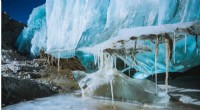
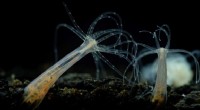
The worm _Belgica antarctica_ lives in the freezing waters of Antarctica. To survive in such cold conditions, the worm produces a special type of antifreeze protein. This protein binds to ice crystals and prevents them from growing too large, which can damage cells.
The antifreeze protein produced by _B. antarctica_ is a small, globular protein with a highly ordered structure. It consists of two domains, each of which contains a repeating sequence of amino acids. The repeating sequence in the first domain is alanine-alanine-threonine (AAT), while the repeating sequence in the second domain is proline-alanine-threonine (PAT).
The AAT and PAT sequences in the antifreeze protein are responsible for its ice-binding properties. The AAT sequence binds to the surface of ice crystals, while the PAT sequence prevents the crystals from growing.
What that has to do with climate change
The antifreeze protein produced by _B. antarctica_ is a potential source of inspiration for the development of new antifreeze materials. Such materials could be used to protect aircraft, ships, and other structures from freezing in cold climates.
In addition, the study of antifreeze proteins from Antarctic organisms could help us to understand how they adapt to climate change. As the climate changes, Antarctic organisms are facing new challenges, including rising temperatures and changing ice conditions. The study of antifreeze proteins could help us to understand how these organisms are adapting to these challenges, and how they might be able to survive in the future.
Conclusion
The antifreeze protein produced by _B. antarctica_ is a fascinating example of how organisms can adapt to extreme environments. The study of this protein could have important implications for the development of new antifreeze materials and for understanding how Antarctic organisms are adapting to climate change.