A new invention has the potential to revolutionize how diseases are diagnosed, offering a faster and more accurate way to identify illnesses. The device is a small, handheld scanner that can detect the presence of specific biomarkers in a person's saliva or blood. These biomarkers are molecules that are produced by the body in response to the presence of a disease, and their presence can be used to diagnose the condition.
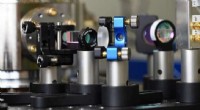
The scanner is based on a technology called surface-enhanced Raman spectroscopy (SERS). SERS involves the use of a laser to excite molecules on a surface, causing them to produce a unique Raman spectrum. This spectrum can then be used to identify the molecules that are present.
In the case of the new scanner, the surface that is used is a gold nanoparticle-coated glass slide. When a saliva or blood sample is placed on the slide, the biomarkers in the sample bind to the gold nanoparticles. The laser then excites the nanoparticles, causing them to produce a Raman spectrum that can be used to identify the biomarkers.
The new scanner has a number of advantages over traditional diagnostic methods. It is much faster, as it can provide results in minutes rather than hours or days. It is also more accurate, as it can detect biomarkers at a lower concentration than traditional methods. Additionally, the scanner is non-invasive, as it does not require a needle to collect a blood sample.
The new scanner is currently being developed by a team of researchers at the University of California, Berkeley. The team is working to improve the sensitivity and specificity of the scanner, as well as to make it more user-friendly. They hope to have the scanner available for commercial use within the next few years.
The new scanner has the potential to revolutionize how diseases are diagnosed. It could make it possible to diagnose diseases earlier and more accurately, which could lead to better treatment outcomes. The scanner could also be used to screen for diseases in large populations, which could help to identify outbreaks and prevent them from spreading.
The new scanner is a promising new technology that has the potential to make a significant impact on the world of healthcare.