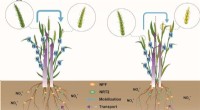
Transport proteins are responsible for the movement of molecules across cell membranes. They are essential for the cell to function properly, as they allow the cell to take in nutrients and expel waste products. However, transport proteins can also be dangerous, as they can allow harmful substances to enter the cell. To prevent this, transport proteins have brakes that can slow down or stop their activity.
There are a number of different ways that transport proteins can be regulated. One common mechanism is through the use of inhibitors. Inhibitors are molecules that bind to transport proteins and prevent them from functioning properly. Inhibitors can be produced by the cell itself, or they can come from outside the cell.
Another way that transport proteins can be regulated is through the use of voltage-gated channels. Voltage-gated channels are transport proteins that open and close in response to changes in the electrical potential across the cell membrane. When the electrical potential is high, the channels open and allow molecules to pass through. When the electrical potential is low, the channels close and prevent molecules from passing through.
The use of brakes on transport proteins is essential for the cell to function properly. By controlling the activity of transport proteins, the cell can protect itself from harmful substances and ensure that it has the nutrients it needs.
Examples of transport proteins that have brakes
There are a number of different transport proteins that have brakes. Some of the most common include:
* The sodium-potassium pump is a transport protein that pumps sodium ions out of the cell and potassium ions into the cell. It is essential for maintaining the cell's electrical potential and for regulating the cell's volume. The sodium-potassium pump is regulated by a number of inhibitors, including ouabain and digitalis.
* The glucose transporter is a transport protein that allows glucose to enter the cell. It is essential for the cell to obtain the energy it needs to function. The glucose transporter is regulated by a number of inhibitors, including insulin and phloretin.
* The chloride channel is a voltage-gated channel that allows chloride ions to enter the cell. It is essential for regulating the cell's electrical potential and for fluid secretion. The chloride channel is regulated by a number of inhibitors, including niflumic acid and diphenylamine-2-carboxylic acid.
Conclusion
Transport proteins are essential for the cell to function properly. However, they can also be dangerous, as they can allow harmful substances to enter the cell. To prevent this, transport proteins have brakes that can slow down or stop their activity. The use of brakes on transport proteins is essential for the cell to function properly.