We all have about 20,000 genes, but what really makes each of us unique are the stretches of "junk" DNA that surround our genes, researchers have found. Only about two percent of our genome actually codes for proteins. However, the remaining 98 percent is not all junk, it turns out.
While scientists used to dismiss most of this extra DNA as "selfish DNA" that only serves its own interests, it is now known that much of it is vital to life, especially those sequences that regulate gene expression. They act like switches, turning genes on or off as needed, and controlling gene activity in precise ways.
Researchers at the HudsonAlpha Institute for Biotechnology in Huntsville, Alabama, showed in 2003 that the non-coding regions are what makes each person's genome unique, even among identical twins. Even though fraternal twins have only 50 percent of their genes in common, their non-coding regions differ by only 0.1 percent. But with identical twins, who share 100 percent of their genes, their non-coding regions differ by a much greater 0.5 percent.
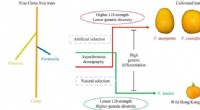
Scientists say the explanation is that over the generations, the coding sequences of genes are preserved through evolution because if mutations occur, they disrupt the proper functioning of the protein. But since natural selection has no "opinion" about the non-coding regions, these regions can diverge rapidly from person to person.