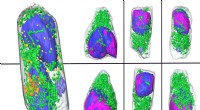
A team of researchers from the University of California, San Diego School of Medicine have discovered how a disease-causing parasite is able to evade the human innate immune system. The findings, published in the journal Nature Microbiology, could lead to new treatments for a variety of parasitic diseases.
The parasite, called Trypanosoma cruzi, is the causative agent of Chagas disease, a potentially fatal condition that affects millions of people in Latin America. T. cruzi is transmitted to humans through the bite of an infected triatomine bug. Once inside the human body, the parasite can invade a variety of cells, including heart, muscle, and nerve cells.
The human innate immune system is designed to recognize and destroy foreign invaders like T. cruzi. However, the parasite has evolved a number of mechanisms to evade the immune system. One of these mechanisms is the ability to produce a molecule called complement inhibitory protein (CIP).
CIP binds to complement proteins, which are essential for the immune system to destroy pathogens. By binding to complement proteins, CIP prevents them from doing their job, allowing T. cruzi to survive and replicate.
The researchers found that CIP is essential for T. cruzi to cause disease in mice. Mice that were deficient in CIP were resistant to infection with T. cruzi.
The findings suggest that CIP could be a potential target for new drugs to treat Chagas disease. By developing drugs that inhibit CIP, it may be possible to prevent T. cruzi from evading the immune system and causing disease.
"Our findings provide new insights into the pathogenesis of Chagas disease and could lead to the development of new therapies for this devastating disease," said study senior author Dr. Christopher J. Schmunck, a professor of medicine at UC San Diego School of Medicine.