Scientists have made a significant breakthrough in understanding how biological activity is regulated in the genomes of fruit flies and roundworms. The findings, published in the journal Nature Genetics, provide new insights into the mechanisms that control gene expression and could have implications for understanding human diseases.
The research team, led by Dr. Ian Dunham at the Wellcome Trust Sanger Institute in the UK, used a technique called chromatin immunoprecipitation followed by sequencing (ChIP-seq) to map the locations of proteins that regulate gene expression in fruit fly and roundworm genomes. They found that these proteins, called transcription factors, bind to specific DNA sequences and then recruit other proteins to the site to either turn genes on or off.
The researchers also identified a number of new transcription factors that are involved in regulating gene expression in fruit flies and roundworms. These transcription factors are likely to play important roles in controlling a variety of biological processes, including development, metabolism, and reproduction.
The findings of this study provide a valuable resource for researchers who are studying gene regulation in fruit flies and roundworms. They also provide new insights into the mechanisms that control gene expression in humans, which could have implications for understanding human diseases.
Background
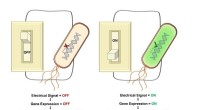
Gene expression is the process by which information from a gene is used to produce a functional product, such as a protein. Gene expression is regulated by a complex network of proteins that bind to DNA and control when genes are turned on or off.
Transcription factors are proteins that play a key role in regulating gene expression. They bind to specific DNA sequences, called promoters, and then recruit other proteins to the site to either turn genes on or off.
Chromatin immunoprecipitation followed by sequencing (ChIP-seq) is a technique that can be used to identify the locations of transcription factors in a genome. This technique involves immunoprecipitating chromatin, which is the DNA and proteins that make up chromosomes, with antibodies that are specific for a particular transcription factor. The immunoprecipitated chromatin is then sequenced to identify the DNA sequences that the transcription factor binds to.
Results
The researchers used ChIP-seq to map the locations of transcription factors in fruit fly and roundworm genomes. They found that transcription factors bind to specific DNA sequences and then recruit other proteins to the site to either turn genes on or off.
The researchers also identified a number of new transcription factors that are involved in regulating gene expression in fruit flies and roundworms. These transcription factors are likely to play important roles in controlling a variety of biological processes, including development, metabolism, and reproduction.
Significance
The findings of this study provide a valuable resource for researchers who are studying gene regulation in fruit flies and roundworms. They also provide new insights into the mechanisms that control gene expression in humans, which could have implications for understanding human diseases.