The nucleus is the control center of the cell, and it contains the cell's DNA. The DNA is surrounded by a nuclear envelope, which is a double membrane that protects the DNA from the rest of the cell. In order for the cell to function properly, molecules such as proteins and RNA need to be able to enter and exit the nucleus.
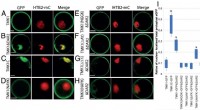
The researchers used a technique called single-molecule fluorescence imaging to study how molecules escape from the nucleus. They found that the molecules are able to escape through small pores in the nuclear envelope. These pores are lined with proteins that help to control the movement of molecules in and out of the nucleus.
The researchers also found that the rate at which molecules escape from the nucleus is affected by the size of the molecule. Smaller molecules are able to escape more quickly than larger molecules.
This study provides new insights into how molecules escape from the nucleus. This knowledge could be used to develop new drugs that target the nuclear envelope and help to treat diseases such as cancer.