Growth factors are essential proteins that play a crucial role in various biological processes, including cell proliferation, differentiation, and migration. They act as signaling molecules, transmitting information from outside the cell to the interior to initiate specific responses. However, how these growth factors are regulated and controlled within the body has remained a subject of ongoing investigation.
Heparan sulfate is a complex sugar molecule found on the surface of cells and in the extracellular matrix, the material that surrounds and supports cells in tissues. It has been known to interact with various proteins, including growth factors, but its precise role in regulating their activities has not been fully understood.
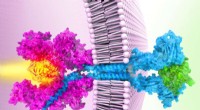
In their study, the SCRM researchers, led by Dr. Maria Sepúlveda, employed advanced techniques to analyze the interactions between heparan sulfate and growth factor proteins. They discovered that heparan sulfate undergoes dynamic changes in its structure, which significantly impacts its ability to bind to and regulate the activities of growth factors.
Specifically, the researchers found that certain modifications to the heparan sulfate molecule, such as the addition of specific sugar groups, enhance its binding affinity for growth factors. This increased binding leads to the stabilization of growth factors, preventing their premature degradation and allowing them to exert their effects for a more extended period.
Moreover, the researchers revealed that the heparan sulfate-growth factor interactions can influence the cellular response to growth factors. For instance, in the case of fibroblast growth factor-2 (FGF-2), a crucial factor in tissue repair and regeneration, heparan sulfate binding was found to enhance the migration of endothelial cells, essential for the formation of new blood vessels.
The findings of this study provide novel insights into the intricate interplay between heparan sulfate and growth factor proteins, expanding our understanding of how cells communicate and regulate their behavior in response to external cues. This knowledge has important implications for tissue engineering and regenerative medicine, where growth factors are often employed to stimulate tissue repair and regeneration. By manipulating heparan sulfate and its interactions with growth factors, researchers can potentially improve the efficacy of growth factor-based therapies and enhance tissue regeneration outcomes.
In conclusion, the research team led by Dr. Sepúlveda has uncovered a crucial role for heparan sulfate in regulating the functions of growth factor proteins, revealing a new mechanism that governs cell behavior and tissue development. This discovery opens new avenues for exploring heparan sulfate-based strategies to improve tissue engineering and regenerative medicine approaches.