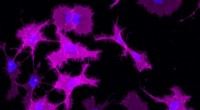
In a trio of papers published in the journal Nature Communications, the researchers described the function of a molecule known as RAPTOR, which orchestrates a cell's response to insulin. Mutations in RAPTOR result in insulin resistance and type 2 diabetes.
"RAPTOR is the gatekeeper that allows nutrients to enter a cell," said senior author Lewis C. Cantley, Ph.D., Meyer Director of the Sandra and Edward Meyer Cancer Center at Jefferson and a Howard Hughes Medical Institute Investigator. "Without RAPTOR, the body can't regulate glucose properly and type 2 diabetes develops. Understanding RAPTOR's role is critical for the treatment of insulin resistance and type 2 diabetes."
RAPTOR (regulatory associated protein of mTOR) controls an essential cellular process called protein synthesis. In people with diabetes and obesity, the RAPTOR cellular pathway goes into overdrive, leading to overproduction of proteins that drive abnormal cell and tissue growth.
The papers detail the atomic structure and interactions of RAPTOR as it switches from an off-state to an on-state, like flipping a switch to turn on a light, when triggered by insulin.
The researchers determined the structure of RAPTOR's two functionally separate domains and discovered how they interact with other proteins to control this molecular switch. This mechanism of allosteric regulation represents a general concept that could be applied to other systems.
"Allosteric regulation is how switches are flipped; it's how RAPTOR turns on and off," said first author Michael Hall, Ph.D., a Research Assistant Professor of Biochemistry and Molecular Biology at Thomas Jefferson University. "Finding out how RAPTOR regulates the switch could tell us how we can control it with therapeutic agents."
"With diabetes, the molecular switch becomes stuck in the 'on' position," Hall continued. "A potential therapeutic strategy could be to force the switch into the 'off' position, halting disease progression."
Other authors include: Yanqin Zhao, Ph.D., Yi Zheng, M.D., Ph.D., and Jing Chen, Ph.D., all of Thomas Jefferson University.
Support for this research was provided in part by the National Institute of Health (R01DK112064 and R01DK099545) and the Howard Hughes Medical Institute.
Article References
Structure and mechanism of the TOR kinase domains in complex with the raptor WD40 domain. doi:10.1038/s41467-019-11372-1.
Molecular basis for autoinhibition of human raptor. doi:10.1038/s41467-019-11369-6.
Structure and mechanism of the RAPTOR ZnF domain in human mTORC1. doi:10.1038/s41467-019-11368-7.