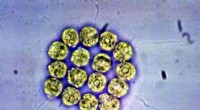
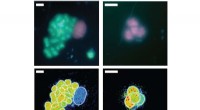
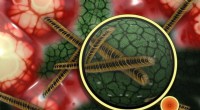
Bacteria are everywhere, and they can cause a variety of infections and diseases. Some bacteria are even resistant to antibiotics, making them difficult to treat. To develop new ways to fight bacteria, researchers are studying how they move.
Bacteria move in a variety of ways, including swimming, crawling, and gliding. Some bacteria also use flagella or pili to move. Flagella are long, whip-like structures that rotate to propel bacteria through liquid. Pili are shorter, hair-like structures that help bacteria attach to surfaces.
Understanding how bacteria move could help researchers develop new ways to prevent them from spreading. For example, researchers could develop surfaces that are resistant to bacterial attachment or that prevent bacteria from swimming or crawling. Such surfaces could be used in hospitals, food processing plants, and other settings where bacteria are a concern.
Researchers are using a variety of techniques to study how bacteria move. Some of these techniques include:
* Microscopy: Microscopy allows researchers to visualize bacteria and their movement in real time. Researchers can use light microscopy, electron microscopy, and other types of microscopy to study bacteria.
* Microfluidics: Microfluidics is the study of fluids on a microscopic scale. Researchers can use microfluidic devices to control the movement of bacteria and to study how they respond to different stimuli.
* Molecular biology: Molecular biology techniques allow researchers to identify the genes that are involved in bacterial movement. Researchers can then study how these genes are regulated and how they affect bacterial movement.
Research on bacterial movement has a number of potential applications, including:
* Development of new anti-bacterial surfaces: Researchers could develop surfaces that are resistant to bacterial attachment or that prevent bacteria from swimming or crawling. Such surfaces could be used in hospitals, food processing plants, and other settings where bacteria are a concern.
* Design of new antibiotics: Researchers could develop new antibiotics that target the proteins that are involved in bacterial movement. Such antibiotics could be more effective at killing bacteria than existing antibiotics.
* Prevention of bacterial infections: Researchers could develop new ways to prevent bacterial infections by understanding how bacteria move. For example, researchers could develop new vaccines that target the proteins that are involved in bacterial movement.
Research on bacterial movement is a promising area of research that has the potential to lead to new ways to prevent and treat bacterial infections. By understanding how bacteria move, researchers can develop new strategies to stop them from spreading and causing disease.