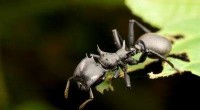
A new study has shown how a parasitic fungus manipulates plants to attract insects, which helps the fungus to spread its spores. The fungus, called *Ophiocordyceps unilateralis*, infects ants and other insects, causing them to climb to the top of a plant and attach themselves to the stem. The fungus then grows out of the insect's body and produces a fruiting body that releases spores.
The study, published in the journal *Current Biology*, found that the fungus produces a chemical that mimics the scent of nectar, which attracts ants. The ants are then infected with the fungus when they come into contact with it. The fungus then takes control of the ant's body and forces it to climb to the top of a plant, where it can spread its spores.
This is the first study to show how a parasitic fungus manipulates plants to attract insects. The findings could have implications for understanding how other parasites spread and for developing new ways to control them.
How the Fungus Manipulates Plants
The fungus, *Ophiocordyceps unilateralis*, infects ants and other insects by releasing spores into the air. The spores land on the insect's body and germinate, producing a mycelium that grows inside the insect's body. The mycelium then takes control of the insect's nervous system and forces it to climb to the top of a plant.
Once the insect is at the top of the plant, the fungus produces a fruiting body that releases spores. The spores are then carried away by the wind and can infect other insects.
The Chemical that Attracts Insects
The fungus produces a chemical called 3-octanone, which mimics the scent of nectar. Nectar is a sugary liquid that is produced by plants to attract insects. The ants are attracted to the scent of 3-octanone and are then infected with the fungus when they come into contact with it.
Implications for Understanding Parasite Spread
The findings of this study could have implications for understanding how other parasites spread. For example, it is possible that other parasites may also use chemical signals to attract hosts. This could help researchers to develop new ways to control parasites by disrupting these chemical signals.
Conclusion
The study published in *Current Biology* has shown how a parasitic fungus manipulates plants to attract insects. This is the first study to show this type of behavior in a fungus, and it could have implications for understanding how other parasites spread. The findings could also lead to new ways to control parasites by disrupting the chemical signals that they use to attract hosts.