Deep within the microscopic realm, a fascinating drama unfolds as scientists peer into the intricacies of how a virus assembles its protective armor, known as the capsid. This minuscule molecular fortress shields the virus's genetic material and plays a pivotal role in its infectivity.
Viruses, while often regarded as malevolent invaders, are biological entities that rely on host cells to replicate and spread. To effectively breach and exploit host defenses, they don intricate armors that aid their survival and transmission. The capsid, composed of specialized viral proteins called capsomers, is a marvel of molecular engineering.
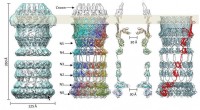
Through advanced microscopy techniques, researchers have managed to capture snapshots of this assembly process, revealing the meticulous choreography of viral components coming together to form the protective shell. By closely observing these microscopic events, scientists gain valuable insights into how viruses operate, paving the way for the development of potential antiviral strategies.
1. Laying the Foundation:
The initial step involves the synthesis of individual capsomers within the host cell. These capsomers are the building blocks of the future capsid. Each virus has a unique capsid architecture, determined by the number, shape, and arrangement of the capsomers.
2. Assembly in Action:
As more capsomers are produced, they begin to self-assemble into larger protein complexes. This self-assembly process is guided by specific interactions between the capsomers, often involving interlocking molecular structures.
3. Symmetry Unveiled:
Depending on the virus species, the capsomers can arrange themselves in various ways to form different symmetrical patterns. These symmetrical formations, such as helical, icosahedral, or complex arrangements, contribute to the overall architecture and stability of the viral capsid.
4. Maturation and Refinement:
The immature capsid, once assembled, might undergo further maturation steps. Additional conformational changes can occur, leading to the incorporation of essential viral components, like the viral genome, or modifications that enhance its stability and infectivity.
5. Ready to Invade:
Once maturation is complete, the fully assembled capsid encases the viral genome, forming the infectious virus particle. This capsid-enclosed viral package is now poised to exit the host cell and seek out new host cells to infect, perpetuating the viral life cycle.
In the microscopic world of viruses, these intricate assembly processes underpin their ability to cause disease. Understanding the assembly mechanisms of the viral capsid is not just an intellectual pursuit; it holds immense significance for developing targeted treatments. By disrupting or inhibiting the formation of the capsid, scientists can potentially disarm viruses and prevent them from successfully invading and multiplying in host cells.
As technology continues to advance and unveil more microscopic details of viral biology, scientists strive to unravel the secrets behind viral assembly, hoping to one day turn the tide against some of humanity's smallest yet most formidable adversaries.