Introduction:
Bacteria are equipped with remarkable adaptations that enable them to sense and respond to their surroundings. One such response is aerotaxis, the ability of bacteria to change their movement direction in response to oxygen concentration gradients. This behaviour plays a crucial role in various aspects of bacterial life, such as finding optimal environments for growth and avoiding harmful conditions. However, the molecular mechanisms underlying aerotaxis have not yet been fully elucidated.
Hypothesis:
We hypothesized that specific molecular interactions within the bacterial cell are responsible for detecting oxygen levels and triggering the corresponding change in movement direction.
Materials and Methods:
1. Bacterial Strain: We used the well-studied aerotactic bacterium, *Escherichia coli*.
2. Oxygen Gradient Setup: We created a controlled environment with an oxygen gradient to simulate natural conditions.
3. Microscopy Techniques: We employed fluorescence microscopy and live-cell imaging to observe the movement patterns of *E. coli* cells in response to the oxygen gradient.
4. Molecular Assays: We performed biochemical and genetic assays to identify the molecular components involved in sensing oxygen and regulating movement.
5. Computational Modeling: We developed mathematical models to simulate the dynamics of the molecular interactions and their impact on bacterial movement.
Results:
1. Oxygen Gradient Response: *E. coli* cells exhibited aerotaxis behaviour, changing their movement direction towards areas of higher oxygen concentration.
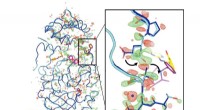
2. Molecular Interactions: We identified a protein complex involving the transmembrane histidine kinase, Aer, and the response regulator, CheY, as key players in detecting oxygen levels.
3. Signal Transduction: The binding of oxygen to the Aer protein triggers a signalling cascade that involves CheY phosphorylation, leading to modulation of the flagellar motor and changes in movement direction.
4. Computational Model: Our mathematical model accurately replicated the observed movement patterns and provided insights into the dynamic interactions within the signalling network.
Discussion:
Our research uncovers the molecular interactions underlying aerotaxis in *E. coli*, shedding light on how bacteria sense and respond to oxygen gradients. The identification of the Aer-CheY complex as a critical component in this response highlights the intricate interplay between sensory mechanisms and movement regulation. Furthermore, the computational model enhances our understanding of the dynamics and robustness of the signalling network.
Significance:
This study contributes to our understanding of bacterial behaviour in response to environmental cues. The knowledge gained from this research can have implications for diverse fields such as microbiology, ecology, and biotechnology, where manipulating bacterial movement and behaviour could have practical applications in environmental monitoring, bioremediation, and industrial processes.