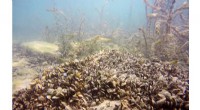
Biofilms, slimy conglomerations of microorganisms, can cause a wide range of problems, from fouling industrial equipment to causing persistent infections in the human body. Scientists are constantly searching for new ways to control biofilms, and a promising candidate has emerged in the form of a predatory bacterium called Bdellovibrio bacteriovorus.
Bdellovibrio's Predatory Prowess
Bdellovibrio bacteriovorus is a small, rod-shaped bacterium that preys on other bacteria. It uses a unique hunting strategy, entering the periplasmic space of its victim, the narrow gap between the cell membrane and the outer membrane. Once inside, Bdellovibrio feeds on the prey's cytoplasm and multiplies, eventually bursting out of the host cell and releasing a new generation of predators.
Harnessing Bdellovibrio for Biofilm Control
The ability of Bdellovibrio to prey on a wide range of bacteria, including those that form biofilms, makes it an attractive candidate for biofilm control. Researchers have explored various ways to harness Bdellovibrio's predatory prowess, including:
1. Direct Application: Bdellovibrio can be directly applied to biofilms, either as a pure culture or in combination with other treatments. Studies have shown that Bdellovibrio can effectively reduce biofilm formation and disperse existing biofilms.
2. Bioaugmentation: Bioaugmentation involves introducing beneficial microorganisms into an environment to enhance its microbial ecology. In the case of biofilm control, Bdellovibrio can be introduced into systems prone to biofilm formation to prevent their establishment or reduce their impact.
3. Genetic Engineering: Scientists are exploring the genetic modification of Bdellovibrio to enhance its predatory capabilities or engineer specific traits, such as the ability to produce biofilm-degrading enzymes.
Challenges and Future Prospects
While Bdellovibrio bacteriovorus shows great potential for biofilm control, several challenges need to be addressed for its widespread application:
1. Host Range: Bdellovibrio has a broad host range, but not all bacteria are equally susceptible to its predation. Further research is needed to understand the factors influencing Bdellovibrio's host specificity and to expand its predatory capabilities.
2. Environmental Factors: The effectiveness of Bdellovibrio can be influenced by environmental factors such as temperature, pH, and nutrient availability. Optimizing these conditions is crucial for maximizing Bdellovibrio's performance.
3. Regulatory Compliance: The use of live microorganisms for biofilm control may require regulatory approval, especially in applications related to human health or food safety. Ensuring the safety and efficacy of Bdellovibrio-based treatments will be essential for their commercialization.
Despite these challenges, Bdellovibrio bacteriovorus holds immense promise as a natural solution for biofilm control. Its predatory nature, versatility, and ease of cultivation make it a promising candidate for diverse applications, from industrial settings to healthcare. Further research and development are needed to fully harness Bdellovibrio's potential and make it a viable weapon in the fight against biofilms.