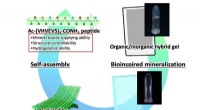
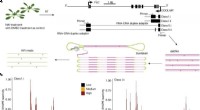
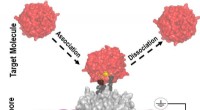
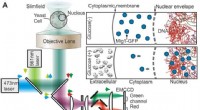
Self-Assembling Molecules: At the heart of life's code is the ability of molecules to form specific structures that carry out crucial functions. Scientists have observed that certain molecules have the remarkable capacity to self-assemble into complex, ordered patterns. These self-organizing systems mimic some of the fundamental principles of living organisms and hint at how the first building blocks of life could have arisen from simple chemicals.
Prebiotic Chemistry: The environment of early Earth, billions of years ago, was drastically different from today's world. Through laboratory simulations and chemical analysis, scientists study prebiotic chemistry, exploring the reactions and conditions that might have existed on the young Earth. Experiments have yielded promising results, demonstrating how basic molecules could have combined to form more complex organic compounds, possibly leading to the emergence of early life forms.
RNA's Dual Nature: Ribonucleic acid (RNA) has long captured the interest of scientists as it exhibits characteristics of both genetic information storage and enzymatic catalysis. This dual nature suggests that RNA may have played a pivotal role in the origin of life. Researchers continue to investigate how RNA molecules might have evolved to possess both informational and functional capabilities, offering a glimpse into the potential precursors of genetic code.
Hydrothermal Vents: Deep beneath the ocean's surface, hydrothermal vents spew out hot, mineral-rich fluids. These environments provide a unique setting that supports diverse ecosystems thriving in extreme conditions. Some scientists propose that hydrothermal vents may have been cradle for life, as they offer a stable energy source and essential chemical components for the emergence of complex organic molecules.
Lipid Membranes: The boundary of cells, known as the cell membrane, plays a vital role in maintaining cellular integrity and regulating interactions with the environment. Scientists have uncovered the potential for lipid molecules to form self-assembled structures that resemble primitive cell membranes. These lipid-based compartments can trap molecules and facilitate chemical reactions, hinting at the fundamental structures that gave rise to living cells.
While the quest to understand the origin of life remains a compelling challenge, the recent glimpse offered by scientific research provides encouraging insights. By studying self-assembling molecules exploring prebiotic chemistry, investigating the role of RNA, examining hydrothermal vents, and probing the behavior of lipid membranes, scientists are gradually piecing together the puzzle of life's origins. Each discovery brings us closer to unraveling the enigma that has captivated scientists and philosophers throughout history-how the code of life came to be. As research continues, we can look forward to further revelations that illuminate the profound beginnings of life on Earth.