The study, which was published in the journal Cell Host & Microbe, found that Pseudomonas produces a molecule called pyocyanin that helps Campylobacter to adhere to human intestinal cells. This adhesion is essential for Campylobacter to cause infection.
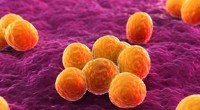
The researchers also found that pyocyanin helps Campylobacter to form a biofilm, which is a community of bacteria that are attached to a surface. Biofilms are more resistant to antibiotics and other antimicrobial agents, making them more difficult to treat.
The findings of this study suggest that Pseudomonas may play a role in the transmission of Campylobacter infection. This could have important implications for public health, as it could lead to the development of new strategies to prevent and treat Campylobacter infection.
In summary, Pseudomonas can help Campylobacter to infect humans by producing a molecule called pyocyanin. Pyocyanin helps Campylobacter to adhere to human intestinal cells and to form a biofilm.