"This is a completely new way to image RNA splicing at high resolution in living cells," said Xiaoliang Sunney Xie, Howard Hughes Medical Institute investigator at Harvard University and senior author of a study describing the new method, which was published November 1, 2018, in the journal Nature. "It's a major conceptual advance."
Gene splicing is a crucial step in the production of proteins, the workhorses of cells. During splicing, introns, non-coding segments of RNA, are cut out of a molecule of messenger RNA (mRNA), and the remaining exons are spliced together to create a coding sequence. This process can produce multiple proteins from a single gene.
Defects in splicing are associated with a number of genetic diseases. For example, mutations that affect splicing sites can cause the skipping or inclusion of exons, leading to the production of abnormal proteins.
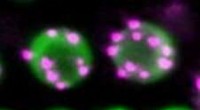
To visualize splicing in living cells, the researchers built a custom-made microscope and combined it with lasers and fluorescent dyes. The lasers excite the dyes, which bind to specific RNA sequences, allowing the researchers to track the movements of RNA molecules in real time.
"We can now watch splicing happening at individual RNA molecules," Xie said. "We can actually visualize how a single RNA molecule folds and moves within a cell."
Using the new technique, the researchers have already made a number of important discoveries about splicing. For example, they have found that splicing is a much more dynamic process than previously thought. They have also discovered that splicing is regulated by a number of proteins that bind to RNA and control its folding.
The new technique is expected to provide a wealth of new information about splicing and its role in gene expression and disease.
"This is a powerful tool that we can use to study splicing in a way that was never possible before," Xie said. "We're excited to see what we can learn with it."
In addition to Xie, other authors of the paper are co-first authors Xiaokun Shu and Xiaojie Zhou, both of Harvard University, and Yonggang Sun of Peking University.