The study, published in the journal Current Biology, provides new insights into the evolution of venom systems and could have implications for understanding the evolution of other complex traits.
"Cone snails are a fascinating group of animals that have evolved a remarkable venom system," said Christopher Meyer, a postdoctoral researcher in the Department of Biology at Penn State and the lead author of the study. "Our research shows that this venom system evolved from spare parts of the cone snail's digestive system, which is a completely novel finding."
Cone snails are marine predators that use their venom to capture and subdue their prey. Their venom is a complex mixture of toxins that can cause paralysis, respiratory depression, and even death.
The venom glands of cone snails are located in the radula, a muscular structure in the mouth that is used to scrape food. The radula of cone snails is covered in tiny teeth, each of which is connected to a venom gland. When a cone snail stings its prey, the teeth inject venom into the victim.
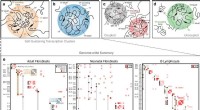
Meyer's research team used a combination of molecular biology and microscopy techniques to study the development of the cone snail venom gland. They found that the venom gland is derived from a group of cells that are normally involved in the formation of the digestive system.
"Our findings suggest that the cone snail venom gland evolved through a process of co-option," Meyer said. "Co-option is when a structure that evolved for one purpose is later adapted for a different purpose. In the case of cone snails, the venom gland evolved from a structure that was originally used for digestion."
The researchers believe that the evolution of the cone snail venom gland was driven by natural selection. Cone snails that were able to produce more potent venom were more successful at capturing and subduing their prey, and thus were more likely to survive and reproduce.
"The evolution of the cone snail venom gland is a remarkable example of how natural selection can drive the evolution of complex traits," Meyer said. "Our findings could have implications for understanding the evolution of other complex traits, such as the eyes, wings, and brains of animals."