Cell expansion is a fundamental process in plant growth, allowing plants to increase in size and develop various structures. During cell expansion, the cell wall, which acts as a rigid boundary surrounding the cell, becomes looser, enabling the cell to absorb water and enlarge.
The research team, headed by UMD's Assistant Professor of Plant Science, Xin Li, focused on a group of proteins called expansins, known to play a vital role in cell expansion by loosening the cell wall. Expansins are secreted by the cell and move into the cell wall, where they break down the bonds that hold the wall's components together.
Using a combination of biochemical, genetic, and imaging techniques, the team studied the function of expansins in Arabidopsis thaliana, a small flowering plant commonly used as a model organism in plant biology.
They discovered that expansins work in concert with other proteins, referred to as "xyloglucan endotransglycosylases" (XETs), to facilitate cell expansion. XETs are enzymes that help rearrange and reconnect the components of the cell wall, allowing the wall to expand while maintaining its integrity.
The researchers found that expansins and XETs work together in a coordinated manner to loosen and modify the cell wall structure, enabling the cell to absorb water and enlarge. This coordinated action is crucial for efficient and controlled cell expansion.
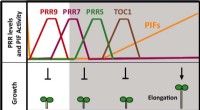
The study also revealed that the activity of expansins and XETs is regulated by various signals and environmental cues. For example, the application of the plant hormone auxin stimulates the expression of expansin and XET genes, leading to increased cell expansion.
This research significantly enhances our understanding of the molecular mechanisms underlying cell expansion in plants. By elucidating the roles of expansins and XETs, and their regulation, the findings pave the way for potential applications in agriculture and horticulture. Manipulating expansin and XET activity could lead to the development of novel strategies to improve crop growth and yield, or modify the properties of plant-based materials used in various industries.