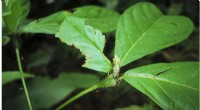
The Asian citrus psyllid (Diaphorina citri) is a tiny insect that is a major pest of citrus trees. The psyllid feeds on the leaves of citrus trees, causing them to drop prematurely. This can damage the tree and reduce its fruit production. The psyllid also transmits a deadly disease to citrus trees called Huanglongbing (HLB), or citrus greening. HLB is a serious threat to the citrus industry and has already caused billions of dollars in losses.
One of the challenges in controlling the Asian citrus psyllid is that it is a very mobile insect. Psyllids can fly long distances, and they are easily spread by wind, rain, and human activity. This makes it difficult to keep them out of citrus groves.
A new study by researchers at the University of Florida may have found a way to stop the Asian citrus psyllid. The study found that psyllids are afraid of heights. When the researchers released psyllids into a flight chamber, the psyllids flew toward the ground. This suggests that psyllids may be able to be trapped by placing traps at different heights in citrus groves.
The study also found that psyllids are attracted to certain colors. The researchers found that psyllids were more likely to fly toward yellow and green traps than they were to fly toward other colors. This suggests that psyllids may be able to be trapped by using yellow and green traps.
The findings of this study could lead to new ways to control the Asian citrus psyllid. By placing traps at different heights and using certain colors, it may be possible to reduce the number of psyllids in citrus groves and help to protect citrus trees from HLB.
In addition to the findings of this study, there are other things that can be done to control the Asian citrus psyllid. These include:
* Inspecting citrus trees for psyllids and removing any that are found.
* Pruning citrus trees to remove branches that are infested with psyllids.
* Using insecticides to kill psyllids.
* Releasing natural enemies of psyllids, such as ladybugs and lacewings.
By taking these steps, it is possible to help protect citrus trees from the Asian citrus psyllid and HLB.