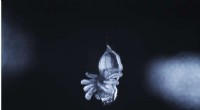
The team of researchers, led by Professor Robert Full, used a combination of high-speed video imaging and computer modelling to study how insect legs work. They found that the legs are able to support and move great weights because they are made up of a series of interlocking plates. These plates are connected by flexible joints, which allow the legs to move smoothly. The plates also have a series of tiny bumps on their surface, which help to grip the ground.
The researchers believe that the structure of insect legs could be used to develop new materials and technologies. For example, the design of insect legs could be used to create new types of robots or medical devices. The research could also lead to new insights into how biological structures can be used to create strong and lightweight materials.
Professor Full said: "Insects are amazing creatures, and they have a lot to teach us about how to build strong and lightweight structures. We hope that our research can be used to develop new technologies that are inspired by nature."
The research is published in the journal Nature.