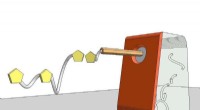
1. Terminal Inverted Repeats (TIRs): Many transposable elements, such as DNA transposons, have terminal inverted repeats (TIRs) at their ends. TIRs act as recognition sequences that are specifically bound by transposase enzymes. Transposases can recognize and bind to TIRs, facilitating the integration of the transposable element into the host genome.
2. Target Site Duplications (TSDs): Some transposons, such as retrotransposons, generate target site duplications (TSDs) upon their integration. TSDs are short, direct repeats that flank the inserted transposable element. Transposases involved in retrotransposition can recognize and insert the transposable element into regions with specific DNA sequence motifs or structural features that allow for efficient integration.
3. Homology-Directed Repair (HDR): Certain mobile DNA sequences, particularly retrotransposons known as LINEs (Long Interspersed Nuclear Elements), can utilize homology-directed repair (HDR) mechanisms to find their target sites. HDR allows for precise integration of DNA sequences into specific regions of the host genome based on sequence homology. LINEs can use their own internal sequences or sequences from other genomic regions as templates for HDR, enabling targeted insertion.
4. Target Priming: Some retrotransposons, such as SINEs (Short Interspersed Nuclear Elements), use a process called target priming for insertion. Target priming involves the reverse transcriptase enzyme of the retrotransposon scanning the host genome for specific sequences, such as tRNA genes or other SINE elements. The reverse transcriptase then uses these sequences as primers to initiate reverse transcription of the transposable element, leading to its integration into the primed location.
5. Chromatin Accessibility: The accessibility of chromatin regions also influences the targeting of mobile DNA sequences. Transposase enzymes can exhibit preferences for integrating into open or accessible chromatin regions, where the DNA is less tightly packed. This allows for more efficient insertion and integration of the transposable element into the host genome.
It's important to note that the targeting mechanisms of mobile DNA sequences can be complex and vary among different classes and families of transposable elements. The specific targeting preferences and mechanisms can also evolve over time, contributing to the diversity and dynamics of transposable element insertions within the host genome.