Summary:
The chaperone Hsp70 plays a critical role in various cellular processes, including protein folding, protein degradation, and protein trafficking. This study reveals a new mechanism by which Hsp70 stabilizes folded proteins. The chaperone protein Hsp70 performs several essential tasks within cells. It helps proteins to fold into their correct shapes, prevents them from aggregating, and repairs damaged proteins. This ensures that proteins are able to perform their roles in the body.
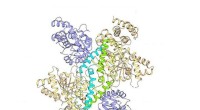
Hsp70 achieves these functions by binding to proteins in a regulated manner. In this study, researchers have discovered a new mechanism by which Hsp70 can bind and stabilize folded proteins. They have identified a molecular switch within Hsp70 that allows it to "clamp" onto folded proteins and prevent them from unfolding.
Understanding this new mechanism could help to develop new therapies for diseases in which proteins misfold and aggregate, such as Alzheimer's and Parkinson's diseases.
Key Findings:
- Hsp70 interacts with folded proteins in an ATP-dependent manner using its ATPase domain.
- The presence of ADP in the ATPase pocket induces conformational changes in Hsp70, causing it to clamp onto folded proteins.
- The clamping mechanism prevents the unfolding of folded proteins and protects them from aggregation.
Significance:
The study provides new insight into the molecular mechanisms by which the chaperone Hsp70 stabilizes folded proteins and prevents their aggregation. This knowledge could contribute to the development of therapeutic strategies for protein-misfolding diseases.