Cells and cell fragments are electrically charged particles. When these particles are placed in an electric field, they experience a force that causes them to move. The direction and magnitude of the force depend on the charge of the particle and the strength of the electric field.
In the case of cells and cell fragments, the charge is determined by the composition of the cell membrane. The membrane is made up of a phospholipid bilayer, which is a double layer of phospholipids. Phospholipids are molecules that have a hydrophilic (water-loving) head and a hydrophobic (water-hating) tail. The hydrophilic heads face the outside of the membrane, while the hydrophobic tails face the inside.
When a cell is placed in an electric field, the hydrophilic heads of the phospholipids in the membrane are attracted to the water molecules in the surrounding fluid. This causes the cell to move towards the electrode that is positively charged.
The size and shape of the cell also play a role in how it moves in an electric field. Smaller cells experience a greater force than larger cells, and spherical cells experience a greater force than irregularly shaped cells.
The ability to separate and sort cells and cell fragments could have implications in medicine, biotechnology, and other fields. For example, this technology could be used to:
* Isolate rare cells for research purposes
* Sort cells based on their size or shape
* Remove damaged or dead cells from a cell population
* Separate cells from bacteria and other contaminants
The researchers are currently working on developing devices that can be used to separate and sort cells and cell fragments based on their electrical properties. These devices could have a wide range of applications, including medical diagnostics, cell therapy, and tissue engineering.
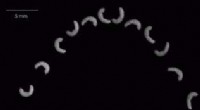
The following video shows how cells and cell fragments move in electric fields. The video was created by the researchers from the University of Twente.
[Video: Cells and cell fragments moving in electric fields](https://www.youtube.com/watch?v=VWY15Y15J8A)