1. Histones and Nucleosome Formation:
- DNA tightly wraps around histone proteins, forming structures called nucleosomes. Each nucleosome consists of DNA wrapped around a core of eight histone proteins.
- Nucleosomes are further packed into a "beads-on-a-string" structure called the 30-nanometer fiber.
2. Higher-Order Structures:
- The 30-nanometer fiber undergoes further coiling and folding, resulting in the formation of higher-order structures such as loops, domains, and solenoid fibers.
- These higher-order structures are arranged in a hierarchical manner, contributing to the compaction of DNA.
3. Scaffold/Matrix Attachment Regions (SARs):
- Specific DNA sequences, known as scaffold/matrix attachment regions, anchor the DNA fibers to the nuclear matrix or scaffold.
- This attachment helps in organizing and positioning different DNA regions within the nucleus.
4. DNA Supercoiling:
- DNA can exist in a supercoiled state, which involves twisting of the DNA double helix.
- Supercoiling can introduce further compaction and structural changes, enabling efficient DNA packing.
5. Epigenetic Modifications:
- Chemical modifications to DNA, such as methylation, can affect the structure and accessibility of DNA.
- These modifications can influence the packing and expression of genes.
6. Nuclear Architecture and Compartmentalization:
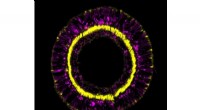
- The cell nucleus is organized into distinct compartments or territories, with different regions of DNA occupying specific domains.
- This compartmentalization aids in the spatial organization and regulation of gene expression.
Through these DNA packing mechanisms, cells are able to accommodate and access the vast amounts of genetic information contained within their long strands of DNA while ensuring efficient functioning of cellular processes.