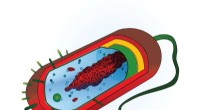
1. The Salmonella Pathogenicity Island 1 (SPI-1) type three secretion system (T3SS): SPI-1 is a specialized virulence system encoded on Salmonella's chromosome. It acts as a molecular syringe, allowing the bacterium to inject effector proteins directly into host cells, manipulating their functions and creating a favorable environment for invasion and replication. The expression of SPI-1 genes is tightly regulated by various environmental cues and regulatory proteins, ensuring its activation at the appropriate time during infection.
2. Two-component regulatory systems: Salmonella employs several two-component regulatory systems that sense environmental signals and initiate appropriate cellular responses. These systems consist of a sensor protein that detects specific stimuli and a cognate response regulator that controls gene expression in response to the input. Examples include the PhoP/PhoQ system, which responds to changes in magnesium concentration, and the OmpR/EnvZ system, which senses osmolarity. These systems regulate the expression of SPI-1 genes and other virulence factors, synchronizing their production with the appropriate environmental conditions.
3. Quorum sensing: Salmonella also utilizes quorum sensing mechanisms to coordinate gene expression and virulence factor production in response to population density. This is achieved through the production and sensing of small signaling molecules called autoinducers. As the bacterial population grows, the concentration of autoinducers increases, triggering changes in gene expression. Quorum sensing allows Salmonella to synchronize its behavior and regulate its virulence determinants in a population-dependent manner.
4. Cyclic AMP (cAMP) signaling: cAMP plays a significant role in synchronizing Salmonella's invasion strategy. Increased intracellular cAMP levels promote the expression of SPI-1 genes and other virulence factors, while low cAMP levels suppress their expression. Salmonella regulates cAMP levels through various mechanisms, including the activity of adenylate cyclase and phosphodiesterase enzymes, which synthesize and degrade cAMP, respectively.
5. Post-translational modifications: Salmonella also employs post-translational modifications, such as phosphorylation and ubiquitination, to regulate the activity and stability of proteins involved in its invasion process. These modifications can modulate protein-protein interactions, protein localization, and enzyme activity, fine-tuning the timing and coordination of Salmonella's virulence mechanisms.
By integrating these regulatory mechanisms, Salmonella synchronizes its invasion plan, ensuring that essential virulence factors are produced at the appropriate time and in response to specific environmental cues. This synchronized and coordinated approach enhances the bacterium's ability to invade host cells, replicate within them, and disseminate within the host.