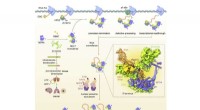
Cells in our bodies are constantly communicating with each other. This intercellular communication is essential for the proper functioning of the body. When communication between cells breaks down, it can lead to disease.
Scientists have been studying cell communication for many years, but there is still much that we don't know. One challenge is that it is difficult to track the conversations between cells. Cells communicate using a variety of signals, including chemical signals, electrical signals, and mechanical signals. These signals can be difficult to detect and measure.
In recent years, scientists have developed new techniques to track cell communication. These techniques have allowed us to learn more about how cells talk to each other and how this communication is involved in health and disease.
One new technique is called single-cell RNA sequencing (scRNA-seq). scRNA-seq allows scientists to measure the gene expression of individual cells in a population. This information can tell us what genes are active in each cell and how these genes are changing in response to different conditions.
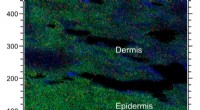
Another new technique is called spatial transcriptomics. Spatial transcriptomics allows scientists to measure the gene expression of cells in a specific location within the body. This information can tell us how cells in different parts of the body are communicating with each other.
These new techniques are helping scientists to gain a better understanding of cell communication. This knowledge could lead to new treatments for diseases that are caused by disrupted cell communication, such as cancer, neurodegenerative diseases, and immune disorders.
Here are some examples of how scientists are using new techniques to track cell communication:
* Scientists have used scRNA-seq to study the development of the human brain. This study revealed that the brain is made up of many different types of cells, each with its own unique gene expression profile. This information is helping us to understand how the brain develops and how it is affected by disease.
* Scientists have used spatial transcriptomics to study the interactions between cells in the immune system. This study revealed that immune cells communicate with each other in a very specific way in order to fight infection. This information could lead to new treatments for autoimmune diseases.
* Scientists have used scRNA-seq to study the metastasis of cancer cells. This study revealed that cancer cells undergo a series of changes in their gene expression as they metastasize from one part of the body to another. This information could lead to new treatments for metastasis.
These are just a few examples of how scientists are using new techniques to track cell communication. These techniques are helping us to gain a better understanding of how cells talk to each other and how this communication is involved in health and disease. This knowledge could lead to new treatments for a wide variety of diseases.