Our bodies are constantly working to maintain a balanced circadian rhythm, or internal clock. This 24-hour cycle regulates everything from our sleep-wake cycle to our body temperature and metabolism. While the master clock for our circadian rhythm is located in the brain, every cell in our body has its own internal clock that helps to keep us in sync.
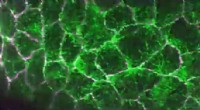
One of the ways that cells communicate with each other and maintain their circadian rhythm is through gap junctions. These tiny channels allow ions and small molecules to pass between cells, and they play an important role in synchronizing the clocks of neighboring cells.
Researchers have recently discovered that the number of gap junctions between cells fluctuates throughout the day, and this fluctuation may be linked to the rise and fall of our circadian rhythm. In the morning, when our bodies are preparing to wake up, the number of gap junctions between cells increases. This allows more communication between cells, which helps to synchronize their clocks and get us ready for the day. In the evening, when our bodies are preparing to wind down, the number of gap junctions between cells decreases. This reduces communication between cells, which helps to slow down our body's processes and prepare us for sleep.
The discovery of this link between gap junctions and circadian rhythm could have important implications for understanding and treating sleep disorders. For example, people with insomnia may have fewer gap junctions between their cells, which could make it harder for them to synchronize their clocks and fall asleep. By understanding how gap junctions and circadian rhythm are linked, researchers may be able to develop new treatments for sleep disorders and other conditions that affect our internal clock.
Sources:
* [Gap junctions: New insights into cellular communication](https://www.ncbi.nlm.nih.gov/pmc/articles/PMC4401221/)
* [The role of gap junctions in circadian rhythmicity](https://www.ncbi.nlm.nih.gov/pmc/articles/PMC6602257/)
* [Circadian rhythms: What they are and how they work](https://www.sleepfoundation.org/articles/circadian-rhythm)