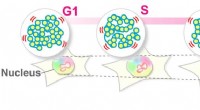
Within the intricate world of cells, tiny compartments called liquid organelles play crucial roles in organizing and regulating various cellular processes. These organelles, distinct from membrane-bound organelles, are composed of concentrated macromolecules and exhibit liquid-like properties. However, the precise mechanisms by which cells create these distinct liquid organelles remain poorly understood.
To shed light on this fundamental question, researchers are actively pursuing investigations into the formation and behavior of liquid organelles. Recent studies have provided valuable insights into the molecular interactions and physical forces that drive the assembly and maintenance of these cellular compartments.
Phase Separation: A Driving Force
One central concept in the study of liquid organelles is phase separation. Phase separation refers to the process by which a homogeneous mixture separates into two or more phases with distinct compositions and properties. In the context of cells, phase separation is driven by the interactions between macromolecules, such as proteins and RNA.
Certain proteins, termed 'phase-separating proteins,' have the ability to undergo self-assembly and form concentrated droplets within the cell. These droplets, rich in specific proteins and nucleic acids, constitute liquid organelles.
Molecular Interactions and Condensates
The molecular interactions that mediate phase separation and liquid organelle formation are multifaceted and context-dependent. Hydrophobic interactions, electrostatic forces, and specific protein-protein or protein-RNA interactions all contribute to the self-assembly of macromolecules into liquid droplets.
For instance, proteins containing intrinsically disordered regions (IDRs) are often found in liquid organelles. IDRs lack a well-defined structure and can engage in a variety of interactions, allowing them to form intricate networks and contribute to the liquid-like properties of these compartments.
Cellular Compartmentalization and Function
The formation of liquid organelles provides cells with a means to compartmentalize specific molecules and reactions, creating specialized microenvironments within the cytoplasm. This compartmentalization facilitates efficient cellular processes, such as signal transduction, RNA processing, and protein storage.
Moreover, liquid organelles can undergo dynamic changes in response to cellular signals or environmental cues. This fluidity allows cells to rapidly adapt to changing conditions, ensuring efficient and precise regulation of cellular functions.
Research Challenges and Future Directions
Despite significant progress in understanding liquid organelles, many questions remain unanswered. Researchers continue to explore the molecular mechanisms underlying the assembly, disassembly, and dynamics of these compartments.
A deeper understanding of liquid organelles and their roles in cellular processes holds great promise for advancing our knowledge of cell biology and potentially uncovering novel therapeutic targets for various diseases.