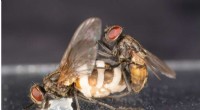
The research team, led by Dr. Anna-Sophie Fiston-Lavier from the University of Geneva in Switzerland, focused on the testes of Drosophila melanogaster, commonly known as the fruit fly. These minute organs play a crucial role in reproduction, producing sperm cells that carry the genetic information necessary for the development of offspring.
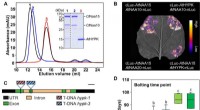
What intrigued the researchers was the presence of a cluster of mysterious DNA sequences within the fruit fly's testes. These sequences, termed "testis-specific piRNAs," were found to be highly active in producing small RNA molecules. These tiny RNAs, known as piRNAs, have been implicated in various biological processes, including the silencing of transposable elements (TEs) – pieces of mobile DNA that can insert themselves into the genome.
But the scientists made a surprising observation: the testis-specific piRNAs, instead of silencing TEs, were actually promoting their expression. Further analysis revealed that these piRNAs were specifically targeting and activating a subset of TEs that had accumulated mutations, rendering them harmless.
This intriguing finding led the researchers to propose a novel model for gene emergence. They suggest that the testis-specific piRNAs, by activating these mutated TEs, create new transcripts – RNA copies of genes – that can be subjected to natural selection. Over time, these transcripts can acquire beneficial mutations, leading to the evolution of new genes with functional roles in the organism.
The study marks a significant step forward in understanding the enigmatic phenomenon of gene emergence. It demonstrates that TEs, often thought of as genomic parasites, can be coopted by the evolutionary process to give rise to new genetic information.
This revelation opens new avenues for exploring the genetic innovations that shape species diversity and adaptation. It also highlights the hidden potential of small RNA molecules in driving evolutionary change.
As Dr. Fiston-Lavier concludes, "Our findings suggest that the testes are not just tiny organs for sperm production but also incredible laboratories for genetic experimentation, where new genes can emerge from the interplay between TEs and small RNAs."