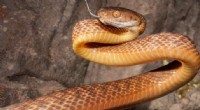
*Animals that are active at night have evolved a number of adaptations that help them see in low light conditions. These adaptations include:*
Large eyes: Larger eyes collect more light, which improves vision in low light conditions.
More rods than cones in the retina: Rods are more sensitive to low light levels than cones, so animals with more rods in their retinas can see better in the dark.
A reflective layer behind the retina: This layer, called the tapetum lucidum, reflects light back into the eye, which increases the amount of light available to the photoreceptor cells.
A higher concentration of vitamin A in the retina: Vitamin A is essential for the production of rhodopsin, a pigment that is necessary for vision in low light conditions.
In addition to these physical adaptations, some animals also have behavioral adaptations that help them see at night. For example, many nocturnal animals avoid bright lights and prefer to hunt in the shadows.
Mathematical modeling has been used to study the effectiveness of these adaptations. One study, published in the journal "PLoS Computational Biology," found that the combination of large eyes, a high concentration of rods, and a reflective layer behind the retina can improve vision in low light conditions by up to 100-fold.
Another study, published in the journal "The Journal of the Optical Society of America A," found that the tapetum lucidum can increase the amount of light available to the photoreceptor cells by up to 50%.
These studies provide mathematical evidence to support the observation that animals have evolved a number of adaptations that help them see at night. These adaptations allow nocturnal animals to survive and thrive in low light conditions.