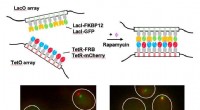
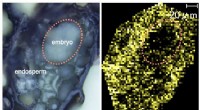
The ability of liquid organelles to maintain their individuality is governed by several key factors:
1. Protein Interactions and Phase Separation: The formation and stability of liquid organelles rely on the specific interactions and phase separation properties of their constituent molecules. Proteins within these organelles often have intrinsically disordered regions (IDRs) or low-complexity domains that promote multivalent interactions and drive the process of phase separation, leading to the formation of liquid droplets. The strength and selectivity of these protein-protein interactions determine the stability and boundaries of the liquid organelles, preventing them from merging with other compartments.
2. Molecular Crowding and Viscosity: The interior of cells is highly crowded, with various macromolecules occupying a significant portion of the cellular volume. This crowded environment influences the behavior of liquid organelles. The presence of other macromolecules outside the organelles can act as physical barriers, hindering fusion events and stabilizing their boundaries. Additionally, the increased viscosity within the cytoplasm can slow down the diffusion of molecules and reduce the collision frequency between organelles, further minimizing the chances of merging.
3. Membrane Interactions: Liquid organelles often interact with cellular membranes, which play a crucial role in maintaining their identity. These interactions can involve specific protein-membrane interactions or the physical confinement of organelles by membrane structures. For instance, liquid organelles can be anchored to the membrane by certain proteins, preventing them from drifting and merging with other organelles.
4. Active Transport and Nucleation: Cells employ various mechanisms to control the distribution and movement of liquid organelles. These processes, including active transport along cytoskeletal networks and nucleation of new organelles, help maintain the separation of liquid organelles. By actively controlling the positioning of these compartments, cells prevent their random collision and fusion.
5. Size and Shape: The size and shape of liquid organelles also influence their behavior. Smaller organelles are less likely to collide and merge compared to larger ones. Furthermore, the shape of organelles, which can be spherical or irregular, may affect their ability to fuse or coalesce.
In conclusion, the coexistence of distinct liquid organelles within cells without merging is a result of a combination of factors, including protein interactions, phase separation, molecular crowding, membrane interactions, active transport, and the size and shape of these compartments. Understanding the mechanisms underlying the maintenance of liquid organelle identity is essential for unraveling the intricate cellular organization and dynamics, and may provide insights into the pathology of various diseases associated with the dysfunction of these compartments.