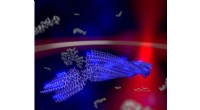
The study focused on the role of a specific protein complex, called the small subunit (SSU) processome, in guiding the assembly of the small ribosomal subunit (SSU). The SSU is one of the two main components of a ribosome, and it plays a critical role in decoding messenger RNA (mRNA) sequences during protein synthesis.
The researchers employed a combination of techniques, including cryo-electron microscopy (cryo-EM), biochemical assays, and genetic analyses, to investigate the composition and function of the SSU processome. They found that the processome contains several proteins that work together to fold and modify ribosomal RNA (rRNA) molecules, as well as recruit other proteins necessary for SSU assembly.
Notably, the study revealed that the SSU processome functions as a quality control checkpoint, ensuring that only properly assembled and functional SSU subunits are incorporated into ribosomes. This quality control mechanism helps to maintain the accuracy and efficiency of protein synthesis within cells.
By elucidating the molecular details of SSU ribosome assembly, the study contributes to a deeper understanding of how cells maintain their protein production machinery. It also provides a framework for future research on ribosome biogenesis and its implications in human health and disease. Disruptions or defects in ribosome assembly have been linked to various genetic disorders and conditions, underscoring the importance of understanding this process.
In summary, the study conducted by researchers at UCSF provides novel insights into the assembly of ribosomes, particularly focusing on the role of the SSU processome and its involvement in quality control during SSU formation. This research expands our knowledge of cellular processes and has potential implications for understanding and treating diseases associated with ribosome assembly defects.