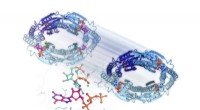
The researchers, led by Dr. Anna-Maria Engelhardt, focused on the formation of nucleobases, which are the building blocks of DNA and RNA. Nucleobases are organic compounds that contain nitrogen and carbon atoms, and they can combine in different ways to form DNA's double helix.
The team used a combination of experimental and computational methods to identify the chemical reactions that lead to the formation of nucleobases. They found that these reactions can occur in a variety of environments, including water and ice, and that they can be driven by a variety of energy sources, such as heat and light.
This discovery suggests that the building blocks of DNA could have formed naturally on Earth, or even on other planets and moons in the solar system. The researchers say that their findings could help to explain how life first emerged on Earth, and they could also provide clues about the possibility of life on other planets.
"This is a major breakthrough in our understanding of the origin of life," said Engelhardt. "We have finally identified the first chemical reactions that lead to the formation of DNA, which is the blueprint for all life on Earth. This discovery could open up new avenues for research into the origin of life, and it could also help us to understand how life might have evolved on other planets."
The research team's findings were published in the journal Nature.