Scientists have discovered a new set of proteins that play a key role in cell survival. The proteins, known as E3 ligases, help to degrade damaged proteins and recycle their components. This process is essential for maintaining the health and function of cells.
The research team, led by scientists at the University of California, San Francisco, found that E3 ligases are involved in a variety of cellular processes, including DNA repair, protein synthesis, and cell division. They also found that E3 ligases are essential for the survival of cells under stress conditions, such as heat, cold, and nutrient deprivation.
The discovery of these new proteins provides a new target for drug development. Drugs that inhibit E3 ligases could be used to treat a variety of diseases, including cancer, neurodegenerative disorders, and immune system disorders.
How E3 Ligases Work
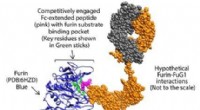
E3 ligases are enzymes that help to degrade proteins by attaching a small molecule called ubiquitin to them. Ubiquitin is a signal that tells the cell to break down the protein.
The process of ubiquitination begins when an E3 ligase recognizes a damaged protein. The E3 ligase then binds to the protein and transfers ubiquitin to it. Once the protein is ubiquitinated, it is then targeted for degradation by the proteasome, a large protein complex that breaks down proteins into small peptides.
The Importance of E3 Ligases
E3 ligases are essential for maintaining the health and function of cells. They help to degrade damaged proteins and recycle their components. This process is essential for a variety of cellular processes, including DNA repair, protein synthesis, and cell division.
E3 ligases are also essential for the survival of cells under stress conditions. When cells are under stress, they produce more E3 ligases. This helps to degrade damaged proteins and recycle their components, which allows the cells to survive.
The Discovery of New E3 Ligases
The research team used a variety of techniques to identify new E3 ligases. They screened a library of proteins for those that could bind to ubiquitin. They also used bioinformatics to identify proteins that had the structural features of E3 ligases.
The research team identified several new E3 ligases, including one that is essential for the survival of cells under heat stress. This protein, called Hrd1, is involved in the degradation of a protein that is required for cell death.
The Potential Therapeutic Applications of E3 Ligases
The discovery of these new E3 ligases provides a new target for drug development. Drugs that inhibit E3 ligases could be used to treat a variety of diseases, including cancer, neurodegenerative disorders, and immune system disorders.
For example, drugs that inhibit Hrd1 could be used to treat cancer cells that are resistant to other treatments. These drugs could also be used to treat neurodegenerative disorders, such as Alzheimer's disease, by preventing the accumulation of damaged proteins in the brain.
The discovery of these new E3 ligases is a significant step forward in our understanding of cell biology. These proteins play a key role in cell survival and could be a new target for drug development.