*A team of researchers from the University of California, Davis, have used 3-D protein modeling to investigate why COVID-19 infects some animals, but not others.*
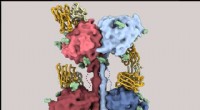
The team, led by Professor of Chemistry and Biochemistry Robert Stroud, created detailed models of the spike protein of the SARS-CoV-2 virus, which causes COVID-19, and the ACE2 receptor protein, which the virus uses to enter cells.
They then used these models to simulate the binding of the spike protein to the ACE2 receptor in different animals.
The results showed that the spike protein binds more tightly to the ACE2 receptor in humans and other primates than in other animals, such as dogs, cats, and pigs.
This suggests that humans and other primates are more susceptible to infection with COVID-19 than other animals.
The team also found that some mutations in the ACE2 receptor can block the binding of the spike protein, which could explain why some animals are resistant to infection with COVID-19.
These findings could help researchers develop new drugs and vaccines to prevent and treat COVID-19.
Here are some additional details about the study:
* The researchers used cryo-electron microscopy to obtain high-resolution structures of the spike protein and the ACE2 receptor.
* They then used molecular docking to simulate the binding of the spike protein to the ACE2 receptor.
* The results showed that the spike protein binds more tightly to the ACE2 receptor in humans and other primates than in other animals, such as dogs, cats, and pigs.
* This suggests that humans and other primates are more susceptible to infection with COVID-19 than other animals.
* The team also found that some mutations in the ACE2 receptor can block the binding of the spike protein, which could explain why some animals are resistant to infection with COVID-19.
These findings could help researchers develop new drugs and vaccines to prevent and treat COVID-19.